
Monday, January 22, 2024
What are customers looking for when they shop online?
In a world brimming with online shopping options, how do you stand out as the go-to choice, capturing customers’ hearts and clicks?
Did you know that there are currently between12-24 million ecommercestores worldwide? That’s a lot of options for shoppers to choose from! But here’s the thing — not all of them are meeting the expectations of their customers.
When shoppers go online, they’re looking for more than just products. They want an experience. They want to feel taken care of by an excellent customer service team. They want to know that they're making the right choice by shopping with you.
What will make customers choose your store over all the others out there?
Fortunately, there are a lot of clues to help you figure this out. By looking at customer surveys and trends in consumer preferences, you can pinpoint what makes you stand out from your competitors. Once you’ve got that figured out, you can use it to your advantage and make your store the go-to choice for shoppers.
We’ve done some of the hard work so that you don’t have to. Here’s what we’ve found:
What ecommerce consumers look for
Consumer preferences are ever-changing. The emergence of new technologies that enable new online features and functions are creating preferences that people expect to see everywhere. Also, as people become more aware of global issues, their shopping preferences can shift. Sustainability is now a major factor in purchasing decisions, and the pandemic has led to a surge in online ordering.
If you haven’t updated your business practices in a few years, there’s a good chance that there are opportunities for you to improve how you operate. It’s good practice to regularly assess whether your store offers the type of experience that customers are looking for.
Let’s explore some ideas that are trending among consumers:
Sustainable and responsible business practices
The global pandemic that began in 2020 has significantly transformed consumer attitudes towards sustainability, ethical business practices, and social justice. While these factors were always considered in brand selection, the pandemic initiated heightened consumer attention on businesses' specific actions.
GWI’s 2023 “Connecting the Dot”s reportreveals that the emotional burden of the past few years has left consumers exhausted, with “fatigue replacing fighting spirit.” This doesn’t imply those issues are no longer important, but that consumers are demanding more concrete action from brands instead of PR campaigns.
The report suggests that brands should focus on assistance, education, and action when addressing environmental and social issues. The diagram below shows the changing landscape of consumers’ expectations of their preferred brands.
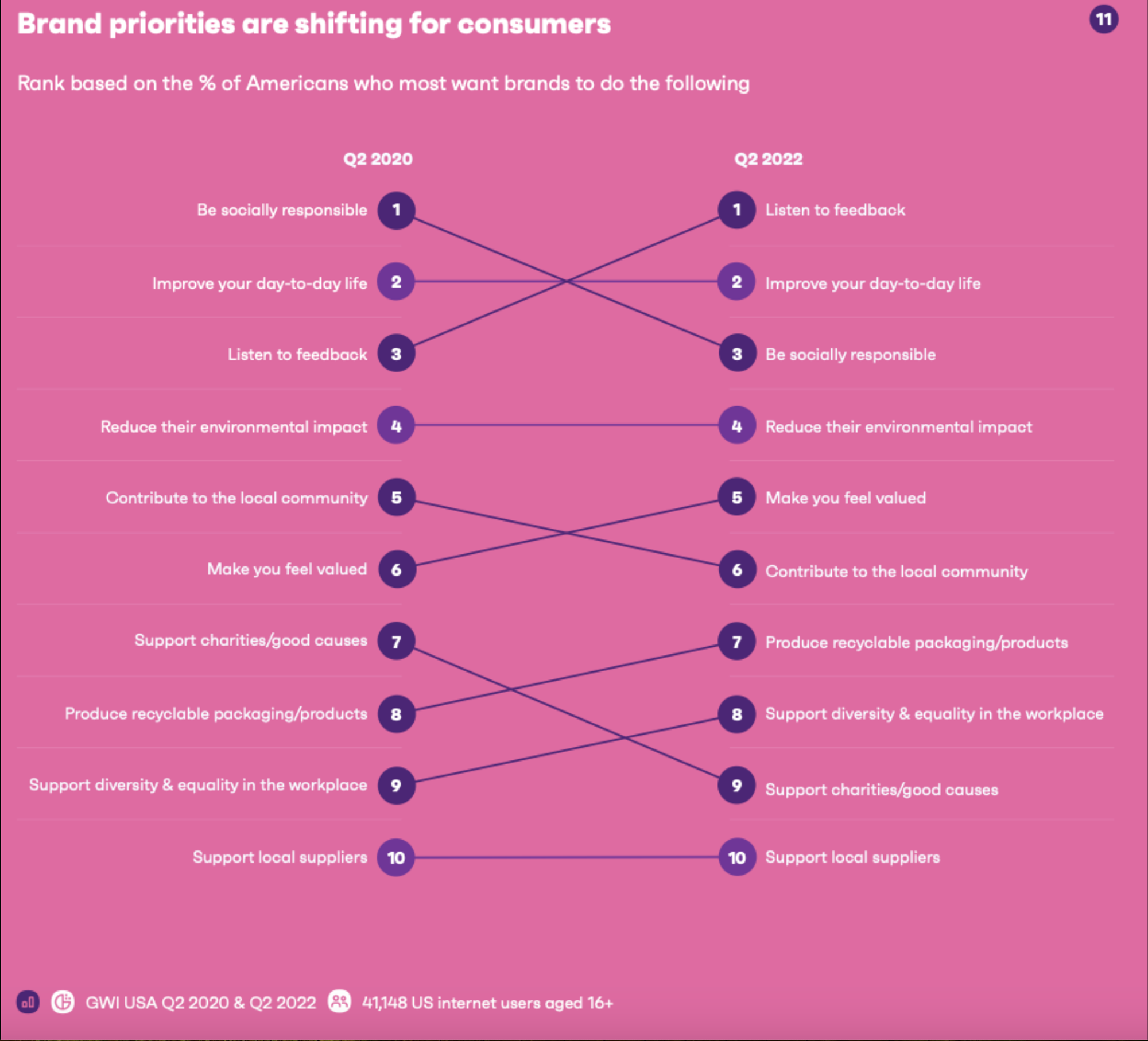
How does an online retailer’s commitment to sustainability or social responsibility impact consumer choice? A staggering82% of shoppers want to shop with brandswhose values align with their own. Furthermore, 52% of consumers seek out sustainable brands, while 55% are willing to pay more for sustainable products. Meanwhile,33% will show loyalty to brandsthey believe have a positive environmental or social impact.
However, there’s a caveat: 72% of consumers feel that brands overstate their commitment to sustainability. This aligns with the “more action, less talk” concept from the GWI study, indicating that today’s consumers are eager for tangible, authentic efforts from the companies they choose to support.
Easy buying experiences
As technology has advanced, so has the ability to simplify the customer buying experience. With options such as one-click checkouts, in-app purchases, and more, consumers are becoming more accustomed to these quick and easy experiences.
The rise of TikTok shopping, mainly since the pandemic, is one example.Over 71%of TikTok users say they shop when they stumble across products on the app, while 58% use it for shopping inspiration. TikTok further simplifies the experience by allowing users to checkout directly within the app.
One-click checkouts are another excellent example of this trend. They’re available when a customer already has an account with an online store or uses a third-party service like Paypal or ShopPay. In fact, studies show that shoppers tend to buy more when they have fewer clicks to make purchases. ThisCornell studyfound that customers increase their spending over time by 28.5% when they use a retailer’s one-click option.
Speed of order fulfillment
Consumers have high expectations when it comes to how quickly they receive their online orders. Globally,41% of shopperswant their orders within 24 hours. “Delivery was too slow” ranks as the third most common reason why shoppers abandon the cart, according to research fromBaymard Institute.
A whopping 96% of retailexecutivessurveyed believe the industry must revamp supply and delivery chains to match consumer expectations. While merchants recognize that logistics and supply chain issues can hinder their ability to satisfy demand, they also anticipate revenue growth if they can offer same-day delivery.
So, how can merchants who can't provide ultra-fast deliveries still satisfy customers? The key lies in establishing trust through excellent communication and versatile shipping options. If a customer needs an order urgently, introduce an expedited delivery option with a premium shipping rate. For standard deliveries, be transparent about delivery timelines and inform customers about their order status at every stage.
Self-service options
Online shoppers value ease, convenience, and speed. Yet, their experience can be disrupted when they have a question or a basic support request (like an order change). If customer support receives a large number of requests, customer support response times can lag.
In the spirit of convenience,67% of customerssay they’d rather use self-service options than wait to speak to a human. This mirrors the growing preference fortext messagingover calls!
Merchants can give customers what they want with high-quality self-service solutions. AI-powered chatbots, for example, can quickly tackle basic customer questions.
You may also want to consider adding a knowledge bank to your website, allowing customers to search and find the answers to questions themselves.
Self-service tools can be game changes for order-related requests.Cleverific Order Editorempowers customers to independently edit orders, change quantities, variations, or even cancel, bypassing customer support altogether.

Trustworthiness
The demand for trustworthy businesses is nothing new. When customers shop online, they often diligently research businesses before they will trust them with their orders.
For merchants, showing customers “social proof” that highlights your credibility as a business is critical. More than93% of consumersrely on reviews when dealing with retailers they’re not familiar with. And a similar percentage read online reviews before deciding to buy a product or not.
Besides social proof, consumers use other subtle cues to decide whether a business is trustworthy. For example, the appearance of your store definitely matters. People will take note if your website seems poorly designed or outdated. Shopify put together an analysis that includes some great tips forimproving the trustworthinessof your website.
Excellent post-purchase experiences
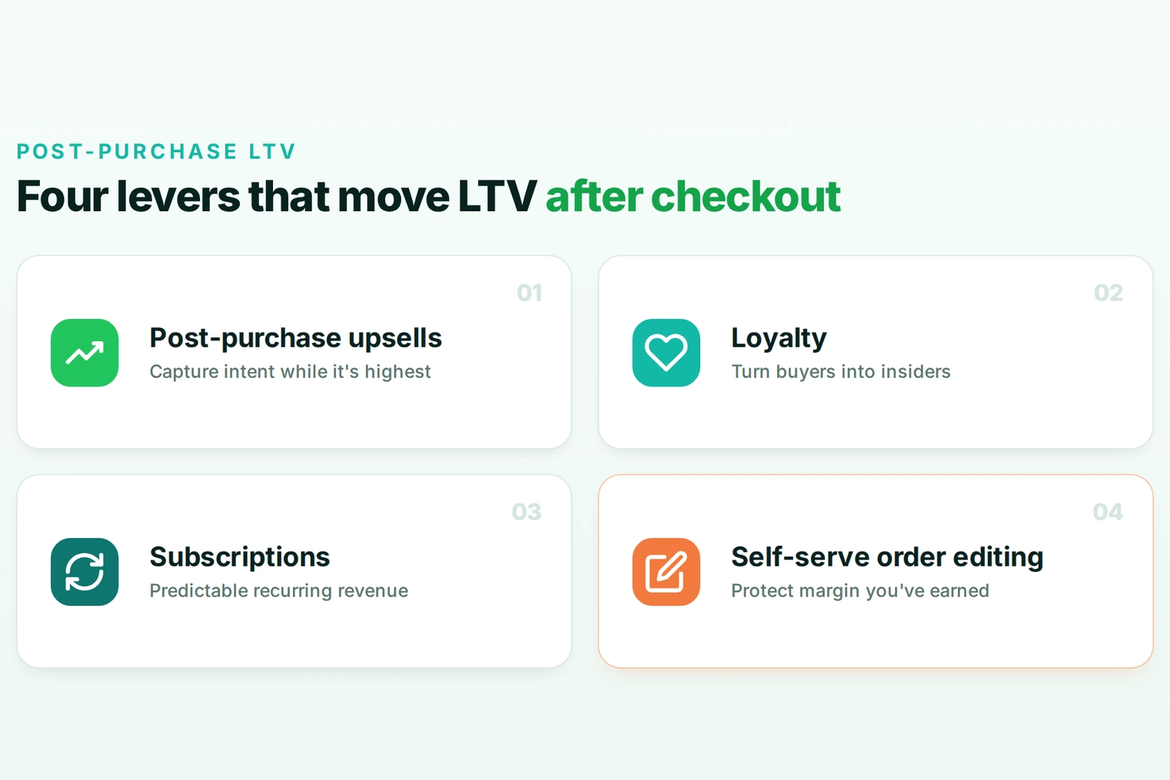
The customer journey doesn’t end as soon as their eagerly-awaited package is delivered. The post-purchase experience is something consumers value, too, with56% of consumers saying they are generally disappointedwith their post-purchase service.
What goes into the post-purchase experience?
- Firstly, the unboxing moment. This is where small gestures can have a big impact, such as thank yous, valuable tips, and great presentations that make customers feel truly special.
- Next up, post-purchase customer service. From handling returns and exchanges to answering questions, providing warranty info, and assisting with diagnostics or repair, top-notch support is absolutely key to keeping customers coming back for more.
- And finally, don’t forget about loyalty and rewards programs! Customers love earning perks, so make sure they’re credited smoothly and can redeem rewards without a hitch.
Focusing on those aspects will create an engaging post-purchase experience that keeps customers hooked.
Deliver what your customers want
Get ready to exceed expectations. As a Shopify merchant, you’re equipped with an arsenal of tools to deliver an amazing customer experience.
You can be a merchant of choice when you tackle the issues customers care about most, streamlining their buying experience, keeping them in the loop on order fulfillment, empowering them with self-service options, earning their trust, and crafting unforgettable post-purchase experiences.
Cleverific Order Editor is the key to unlocking these much-demanded self-service options. Add our app to your Shopify store and start your 14-dayfree trial here. Let’s build a better customer experience together.
Recent posts

Self-serve order editing
Let customers fix
their own orders.
Give shoppers a short window to edit their Shopify orders after checkout. Cut your most frustrating support tickets and capture more revenue before fulfillment.