
Friday, December 26, 2025
Serial hobbies, lifetime pursuits, and business partners who last
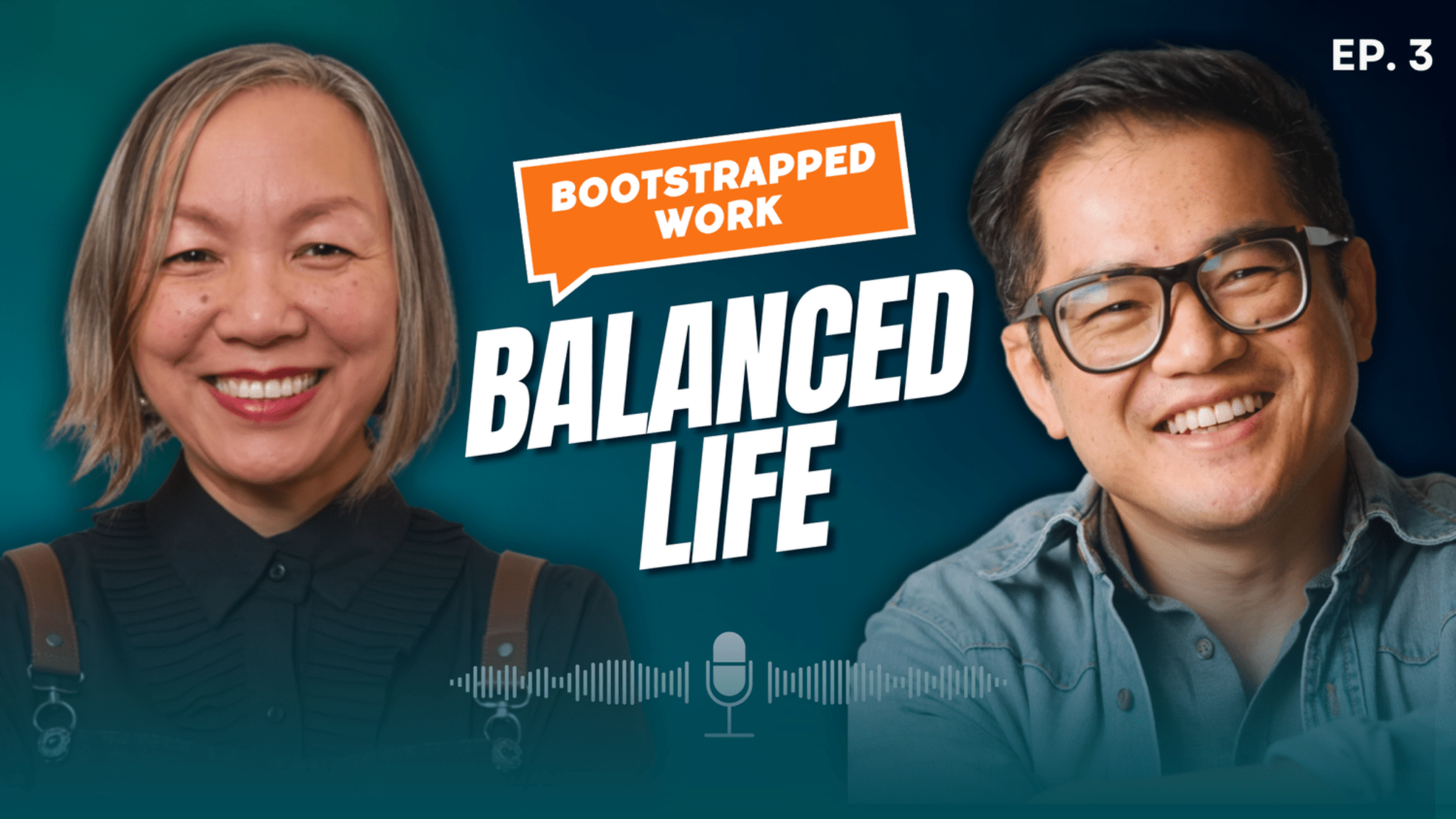
We've been building Cleverific for 10 years. Recently, co-founders Tu and Andrew sat down for a conversation that started with hobbies and ended up somewhere more honest: what actually works when you're in business with someone for a decade.
Serial Hobbies vs. Lifetime Pursuits
Tu burns through hobbies. Cupcakes first. Maple bacon, lemon curd, flavors that required planning. The problem revealed itself quickly: she'd bake a dozen, eat ten herself, and realize this was unsustainable.
Then ceramics. Then custom keyboard keycaps until she learned resin is toxic. That killed that.
Ceramics stuck because it forces focus. The wheel spins, hands shape clay, and there's no room left in your brain for work. That's the point.
Andrew finds hobbies early and never lets go. Thirty years of judo. Twenty years of Brazilian Jiu-Jitsu. When COVID shut everything down, he learned piano, which led to jazz ensemble at City College, which led to choir.
He picks a few things and goes so deep that decades pass.
Two completely opposite systems. Tu samples everything. Andrew commits to almost nothing, but what he commits to, he masters.
They Don't Hang Out
After more than a decade working together,they almost never see each other outside of work.No dinners. No weekend plans. They show up, work closely all week, and leave each other alone the rest of the time.
Every piece of co-founder advice says the opposite. Be best friends. Know each other's families. Align on everything.
But that separation is what makes this sustainable. There's no performance pressure. No obligation to maintain a friendship on top of a business partnership. Just respect and space.
The business relationship works. That's all it needs to be.
The Only Way to Pick a Co-Founder
You can't know if someone's the right partner until you've worked together on something hard. Not hanging out at the same office. Not grabbing drinks after work. Actual collaboration with real stakes and real problems.
Three to six months minimum.Long enough for friction to show up.
Water cooler conversations don't reveal how someone handles pressure. Being friendly at work isn't the same as building something together. You need to see how they think, how they solve problems, and whether they collapse or step up when things go wrong.
Skip that test and you'll discover the breaking points later when it costs much more to walk away.
Crunch as Ritual
Most startups scramble to avoid crunch. Here, it's on the calendar twice a year. May and September. Everyone knows it's coming.
Think of it like rehearsals before a performance. The work intensifies, deadlines get real, and then there's a release. It creates rhythm in work that would otherwise stretch endlessly. And it builds team cohesion in a way Slack channels never could.
This happens within a four-day work week.Crunch doesn't mean burning people out.It means focused intensity followed by recovery.
After each cycle: cool-down work. Exploratory projects. Big-picture thinking. Time to breathe before the next one.
This structure took four or five attempts to get right. Too rigid didn't work. Too loose didn't work. Somewhere in between did.
The Workshop Model
The development process doesn't fit Scrum. Doesn't fit Agile. Doesn't fit any framework with a capital letter and a certification program.
It works more like an artist's workshop. Check how pieces fit together every day. Keep what works. Throw out what doesn't. If code isn't serving the product, delete the file and start fresh.No attachment to work just because it's already done.
Yes, this creates waste. It also creates a product the team is actually proud of.
The people who stay (five years on average) value doing good work over checking boxes to hit the next promotion. That's the trade-off. If you're optimizing for job titles and resume lines, this isn't your place. If you want to build things well, it is.
Language for Patterns You Already See
A few years ago the team took CliftonStrengths. Not a personality test. A framework for how people process information.
Tu's top strength: strategic. She connects dots fast, assumes everyone else already connected them, and is three steps ahead before the conversation catches up.
Andrew's: achiever. High tolerance for sustained focus. You don't train judo for thirty years without that wiring. But it has a shadow: frustration when it seems others aren't working as hard.
The assessment didn't reveal anything new.It gave language to patterns that were always there.Now when Tu's jumped too far ahead, it's easier to pause and bring everyone along. When Andrew's standards are creating impossible expectations, it's easier to name it and adjust.
Communication was already solid. This just made it more precise.
Against 996
9 AM to 9 PM, six days a week. That's 996 culture. Standard in parts of San Francisco, South Korea, and startups that think suffering equals commitment.
For what? Stock options that pay out for maybe one in a hundred people? Four years of your prime for nothing?
There's a difference betweenchoosing to work extra hoursbecause you love the work and being required to do it. No one at Cleverific stops anyone from working more if they want to. But care is taken not to create pressure for others to match it.
If someone mentions working extra, others might feel obligated to do the same. So it stays quiet. Your choice is your own.
Unlimited PTO That Actually Gets Used
Time off gets raised in one-on-ones. When did you last take a break? You should take some time off.
Unlimited PTO is meaningless if no one uses it. So it gets brought up regularly. Managing energy matters as much as output.
Tu spent a year and a half in Portugal and the UK. Not vacation. Living there. Working the whole time while hauling five animals across Europe, bouncing between three or four apartments, figuring out logistics in real time.
Chaotic? Yes. Possible? Also yes.
The business bends to accommodate life instead of demanding life bend to accommodate the business. There's always another solution if you're willing to find it.
Two-Way Doors
Every decision gets the same question:is this a two-way door?
If you can reverse course when things don't work, there's no reason to agonize over the choice. No trap. No sunk cost fallacy. Just try it and adjust.
Decisions move fast. Weigh options, test it, fix it if needed. Workshop model again. Sometimes the only way to know if something works is to try it.
Conquering Stage Fright Through Repetition
Andrew used to get crippling nerves before competitions. Judo and jiu-jitsu matches would create this hollow feeling in his legs. Couldn't generate power. Couldn't push off properly.
Psychology work and meditation helped. The real shift:learning to be completely present.Not thinking about winning or losing. Just being there. That breakthrough led to a world championship in Brazilian Jiu-Jitsu.
Now stage fright doesn't exist. Jazz band, choir, performing in front of people. The first note plays and the rest disappears.
Tu's building that capacity differently. Saying yes to every speaking opportunity, every video, every chance to practice. You can't get better at something by avoiding it.
But talking alone in a room and talking in public are different skills. She can talk for an hour easily. Staying on track with specific points? That's harder. Her brain jumps topics. The moment she checks whether she's still on track, the flow breaks.
What a Decade Built
Tu runs marketing, co-founder responsibilities, and product design. Andrew codes the strategic work, building the first 50 to 80%, then handing it off for the team to finish.
They don't hang out after hours. They're not best friends. They have two-hour one-on-ones every week (sometimes longer), covering everything from personal life to finances to product direction.
Neither avoids conflict. Both focus on solutions. When they start on different pages, they get to the same page. Neither dwells on what already happened.
The team averages five years tenure. The company is ten years old. People stay longer than most startups survive.
What makes it work isn't magic or perfect compatibility.It's understanding how each person thinks.Giving space for separate lives. Building a company that serves those lives instead of consuming them.
And accepting there's no universal template for this. The approach that works is the one you'll stick with, even when it looks nothing like what everyone else is doing.
Transcript
Tu:I'm going to put you on the spot today. This is going to be about how well we know each other as co-founders. Let's just get into it.
Andrew:Is this like the newlywed game?
Tu:Let's not say that because we already confuse people enough. As of today, what are my top three hobbies? What do you think they are?
Andrew:Your top three hobbies. Wow. When I met you, the first thing I would have said is that you loved baking cupcakes. But I don't know that you've actually baked cupcakes in a while. Your hobbies change all the time. I think right now it's ceramics. Are you still taking the ceramics class? You were making really crazy keyboard keys at some point (keycaps). Which you never even offered me one.
And then, is there a number three? The number three is your cat or one of your bunnies, one of your dogs, the whole menagerie that you have.
Tu:Alright, fair, fair. You're pretty close. Because I'm a serial hobbyist, I was trying to make it much more broad. I like to create things and all of them that you mentioned basically means at some point in time, I wanted to make cupcakes. And then at some point in time, I wanted to make ceramics. And at some point in time, I wanted to make keycaps. And I found all kinds of reasons why it did or it didn't work for me.
So first of all, cupcakes. I could not give enough away and I was eating too many. That's just flat out the truth. I could not... I made maple bacon cupcakes and lemon curd cupcakes and all this. And over time, people are like, "Look, I can't eat that many carbs." So they would sit around and then I think I'd eat 10 of them. No one should be eating that many cupcakes. So that's why I stopped making cupcakes and that's the truth there.
And as far as keycaps are concerned, most of them have to be made with resin. And I didn't realize how toxic resin was until I started researching and digging into it. And I was like, I really want to do this, but I don't think a toxic hobby is a good one for me to pick up. So that's why I stopped that.
When I was making keycaps, I wanted to make really, really small ceramic stuff to put inside of them. And that's kind of how I started to get into ceramics. And then I took a few classes and I really enjoy throwing. There's something very therapeutic about using your hands and having to really focus on making this thing and not focus on thinking about other things as you make this piece. So there's just a spinning thing, the sound of it, your hands just shaping something. It just really works with my personality.
And you're totally... I was about to say, you just totally dated yourself. I can barely remember that.
Andrew:Patrick Swayze's hands on your hands. No one's gonna get that. We're too old.
Tu:That's all I think about when I think of pottery. Do you have a song? Are you groovin'? Are you just gonna turn on the mood lighting? Let's go!
Okay, so for you right now, I would say it's jiu-jitsu, choir, and jazz piano.
Andrew:That's it. I'm pretty easy to figure out. I find things quickly and I go deep. That kind of person. I would say I do have a lot of hobbies. There's a lot of things I go deep on, but when I go deep, I go really, really deep. For example, jazz piano, probably the newest thing. I learned how to play piano during COVID. And when COVID was over, I joined a jazz group at the City College and have been playing jazz with that group for a while. Because of that, I ended up joining choir. And I'm part of the concert choir there at the City College. We have a performance this weekend. Actually, did I tell you about that? Anyways, you're invited to the performance this weekend.
We're doing Vivaldi's Gloria and other stuff set to Vivaldi. So it's all Baroque music. If you want to hear us going Baroque, then we're going to go Baroque for it. I've been doing that for I think a couple of years now. That's the newest part. But Jujutsu I've been doing for 20 years, Judo for 30 years. They're kind of related. Just picking people up and putting them down on the ground and then trying to squeeze their necks.
I pick things, I find things that I like, and then I kind of stick to it for a very long time because I have that personality where I like to be an esoteric expert at the things I do. Same thing with programming. At this point, I've been programming I've been writing code for 30 years, because I started when I was 10 years old. I loved it and so I just kept going.
Tu:I really appreciate that and I think that's definitely the top quality that you have that I wish I had. And that's probably why I properly sought you out as a co-founder. Going back to why I asked in the first place: Do we know each other as co-founders? After 10 years, what people think is we do not hang out all the time after work. Work stays at work.
And we have a shared group of friends, but we don't need to feel like we're family outside of work.
Andrew:That's totally true. It's interesting that we have a very deep overlap, but we actually don't hang out with each other at all because we kind of see each other every day or talk to each other every day already as it is. And we just kind of leave each other to go do our things. We're co-founders, but we don't have to be best friends, although we have a great relationship through the business and everything together. But it's not required. And I think it's something that I think is a highly respectful thing about each other that we just kind of leave each other to live our own lives the way that we want to live it and the way that we want to do that.
Tu:I have another question for you, just to put you on the spot here. You've had, as have I, had a history of being a solo consultant for years and then having the co-founder dynamic. And I always get the same question about, "Hey, how do you decide you would choose to be a co-founder? What is the biggest trait?"
And outside of we already know it you decide that someone, you want someone or you want that co-founder relationship, you have got to do a project where honestly, you think that's the biggest thing. And not fail as in, it didn't work out, but where you had some hardship, I guess is a better way to phrase that, which is you went through the ups and downs on something so you really know how someone is when the going is tough.
Without that kind of friction set, you'll find that later on I think most businesses break up because of that later on because they never exposed themselves to that friction or avoided that friction altogether. Things bubble up. You can't avoid it forever because it's just not realistic.
Andrew:Every business eventually runs into some sort of issue and there's going to be a disagreement somewhere, somehow, and you'll never be able to plan out what it's going to be. So you can't agree on certain things ahead of time. And then no matter how well a business is going, there's always some sort of difference of opinion, even just a difference of wants eventually. And staying aligned there is probably the thing about having a co-founder.
Yeah, people still ask me that question all the time. "Hey, how do I find a co-founder?" My answer is always: you have to do a non-trivial project. You have to do real work with somebody who you get along with at work, at the job, whatever job that you're working at. You like to hang out with and have a beer after work or shoot the shit at the water cooler. That's not the same thing as actually working with them. You can work next to somebody and never work with them in an hour.
So you have to do a non-trivial project together. You have to have some skin in the game where there's some real stakes, some real goals that you're trying to hit. No matter what the timeframe is obviously longer is a little bit better. But if you've worked with somebody for three to six months, that'll be plenty of time to tell if that's somebody who you want to work with for the long haul or at least the next couple of years, which is what it's going to take to build a real non-trivial substantial business.
Tu:Now that you've had the experience of working for yourself and then working with a co-founder, what's next for you? And obviously it doesn't have anything to do with me, but it's like, okay, you've experienced version A and you've experienced version B, what would version C look like for you?
Andrew:What would I do next? Honestly, I don't know. I don't really have an answer for that right now. Right now I'm just thinking about what we're doing today and what we have to do. If I were to start another business in the future, I wouldn't do it without a co-founder. There's just too much to get done to not have somebody who's there along with you to go do the journey with you.
I would definitely have a co-founder be the type of co-founder, ideally, kind of like us, where we're in it for the long haul, where we can have an understanding of how we want to approach the problem or the business and what we want it to do for our lives. Because a business isn't an end in itself. It's here to provide a living, it's here to provide a means to an end, which is for us to live the kind of lives that we want to live and then have the impact with people that we want it to have. How about you?
Tu:I think it depends on the type of business. A real business and by real I mean one that needs to make money and keep doors open I definitely would do with a co-founder. But if it was a for-fun business, a side hobby that turned into a business, then I would just say I would knuckle around and do that myself because it's more fun. And you're not beholden to some constraints when it comes to I need to provide food for someone. I need to make sure that I hold up to my end because Andrew needs to get paid or vice versa. You have to think about these things when you have co-founders.
I'm going to segue back into when I was a solo consultant. My days and what I was doing were much more flexible to my mood. I didn't have to be responsible for anyone but myself. And there's something nice about that. But when the struggle is real and I am pulling those 21-day straight, 12-hour day things by myself, it can be overwhelming. But if you want your business to survive by yourself, then you have to do what it takes when the going gets a little rough.
Andrew:Yeah, yeah, absolutely.
Tu:Speaking of which, we here decided when we were co-founders that we didn't really want to do the long 21-day straight. Do we ever do that in this business? I don't think so. I don't recall a time where I worked as obsessively once we created Cleverific, once we started Cleverific, that I did in my younger years, let's be honest. And then when I was by myself. Because you almost felt like it was feast or famine. And so if you didn't work, then who knows when the next project is? And you had to keep the coffers going. And at the time, when I was working for myself, I also had an assistant. I always had at least one assistant. And I needed to make sure they got paid. So if things happen, I didn't get to go, "Hey, Andrew, what do you think about this?" But as a consultant, you just have to power through literally the hours. If you want the money, you have to power through the hours.
Andrew:I know there was definitely back in the day, the whole feeling of, "I've got somebody who's willing to pay me billable hours and I've got to do this." Also, the only way that you'd be able to justify those billable hours is if you provided value. And you needed to do as much of that as possible while you had good clients. And then also try to bring in new clients at the same time.
There have been times, I think, since we started Cleverific, working in the business, that we schedule crunch times. Part of that is that I think crunch times are useful as a tool for narrowing focus and helping to push strategic initiatives forward. And I think we do a good job of managing those crunch times for us. They're twice a year. They're generally in May leading up to the end of May kind of April towards the end of May timeframe. And then September now for us.
And they narrow focus. They also give a kind of feeling of seasonality. Where you can get a lot of really focused work done, a lot of hard work done. And then take a little bit of a break after it. It builds a lot of camaraderie in the team to have those types of crunch times. So I kind of think of it as, if you're using a music analogy here, it's like you're having all these rehearsals leading up to a date that you're gonna play the show. And then you finally play the show. There's not a lot of situations like that after you get out of school or if you're not involved in theater or music or anything like that. What ends up creating these lives where potentially you might feel like you go to work day in and day out, you do the same thing over and over again, and it's just never ending.
But if you have those crunch times, you can really have some times where you can breathe a little bit. For our team, we use that time to do really exploratory work, big picture kind of thinking. And then that starts to narrow down into these crunch times where it's execute, execute, execute. And everybody is really focused during those times. It is tiring, it's exhausting, but we also do it within a four-day work week so that there's a lot of balance even when there's crunch times. And then after that, we do a good job, I think, of putting what we call cool-down zones or cool-down tasks in place where your mushy, jellily mind, brain can start to recongeal.
Tu:And it took us, I don't know how many iterations to kind of get to this format. We tried maybe four or five different versions before we settled on the one that worked for us in terms of how we like to create the product and how it feels to work on something either too much or too little. You didn't have enough time because you're burning through features or you spent too much time on this. We like some constraints to help us move through that. And it was something we went back and forth with in terms of a very strict formula and a very loose formula. And between the two of them over time, we got to this happy medium.
Andrew:Yeah, we've found our process we've basically found our own process. I wouldn't call it one thing or another. It's definitely not Scrum, it's definitely not Agile, it's definitely not a capital-A system where we call it our workshop model. It's something that we've iterated towards in the team and changes in the team makeup and size, I think have driven how we modify that process and incorporate new people into it and how they think and how we all need to work together. So it's definitely not a rigid system. And that can be frustrating for, I think, some people. But once they get into the flow of that, I think what they generally find is that one of the strong suits of that is that we allow you space to get the work done.
It's a great team for the types of people who kind of consider themselves craftspeople, people who like to be really, really good at their job and like to be really good at building things or getting things done and getting things done, not just for the sake of being done, but getting them done well versus just cranking through stuff until they get to their next promotion, whatever their goal might be there.
Tu:Yeah, I agree that we've built some culture around it because not you and me, but other people at least definitely talk to each other outside of work and to be able to do that remote and also have long-term stability. Our team has everyone been with us around five-ish years or something right now? Does this seem like that for four or five years?
Andrew:Yeah, pretty much. So that's the average tenure on the team. Then probably longer. It's like the lifetime of the company at this point.
Tu:I think we did a good job, trial and error obviously, but we did a good job to settle on this place where I think that most people are happy about the work that they do and also get the time off that they need. Because really when we set out way back when, 10 years ago, our main goal was to be able to live a life outside of work. That was our biggest thing. We love the things that we do and we love the product that we built here, but it's in service of our lives outside of work. And we recognize that for ourselves and for everyone else on the team.
Andrew:Yeah, absolutely. Have you heard about this thing called 996, I think it is? Am I getting those numbers right?
Tu:If you ever bring that up again, then this is over.
Andrew:Hahaha!
Tu:Yes, I have heard of it and it sounds like a complete nightmare.
Andrew:Can you explain what 996 is?
Tu:9 AM to 9 PM, six days a week.
Andrew:Yeah.
Tu:Why is it even it's completely removed from my brain. It doesn't even matter. The idea of anything that's longer than what we're doing is just a bad idea. I think that's isn't that the standard culture in South Korea, if I hear correctly? I mean, it's a standard somewhere.
Andrew:Yeah, I know. I hear about it being a thing in San Francisco, I guess, in that little bubble. And it's sad. I find it so sad, and it makes me sad to think that people are living their lives that way. For what? Stock options? You're going to get out of your stock options, and only for maybe one out of 100 people, it's going to be worth anything. And they've just sunk four years of their life working those hours for nothing. And even if you did work all those hours and you had some big money payout, you just had some of the best years of your life where you could be out there living it up basically and for what? For money? It's really sad for those people.
Tu:I mean, definitely money solves money problems, but it doesn't solve all your problems. And one of the things that I've talked about before maybe not said this out loud with you, but it's unique to software. This idea of getting in and getting out and exiting real quick and having that unicorn payday or whatever else. No, no.
Andrew:Yes, because it's the American dream to make money with computers and then never touch computers again.
Tu:Yeah, right? Right? Yeah. How many people have you known went to after being a code warrior. I have a friend, I mean, he is going he's literally on the farm right now on his tent acres, trying to get to the farmer's market. He went full 180 out there. Harder work, but he loves it more. And that's a matter of how much you love the work. And sure, if you love the work and you want to put in extra, go for it. We're just not making you do it.
The huge difference is that if you feel like you're into whatever you're creating and you want to put some extra hours into it, no one has ever stopped anyone from working more. So there's that. And one of the things that I did notice earlier on too is if I mention that I was putting in X amount of hours, people on the team may feel compelled to do the same. They might feel like, "If she's doing it, then maybe I need to do it." So even if I do it, I try not to mention it. My choice is my own and it's not indicative of what I want other people to do.
Andrew:Yeah, totally. And I think we try to do a good job with that. We don't wear it as a badge of honor, essentially. We're not part of this whole hustle culture BS and stuff and trying to pretend. One, every hour that you put in is a valuable there's diminishing returns. And don't get me wrong, sometimes you just gotta crank on the hours to get something done. We recognize that. But at some point, you gotta have a real life. You gotta remind yourself why you're doing these things here. There's a whole world worth living that's outside of work.
In our one-on-ones with our team and everything, I definitely ask, "Hey, are you taking some time off soon? You haven't taken some time off in a while, you should." To make sure that everybody is comfortable with the time off that they take and managing their energy and their flow and everything. Really taking advantage of our unlimited paid time off policy.
Tu:I'm learning something new. You did it because I have not. And Andrew, by the way, you have not asked me. I'm probably out of the loop here because I have I recognize this year.
Andrew:Yeah, I mean you've been traveling to Portugal for the last year.
Tu:Yeah, I mean, sure, but I was working the entire time. And in between working, I shuffled around five animals across Europe. That was a lot of work. We can have a whole three-hour conversation about going through the English Channel and back and the whole nine yards. And then moving, I don't know, moving three, four apartments in the same time. It was pretty chaotic. And going back to the fact that I was able to do that we're so flexible to figure out how to make things work versus flat out saying no to things. Because there's always more than one solution. And also that we can adjust if it's not working. That's how we're making decisions.
One of the things I mentioned is that we have the ability to make decisions quicker. That's an understood thing between us. We assess the pros and cons, we don't sit around and mull things over for too long. We're just like, "You know what? My quick assessment is that this will or won't work and let's give it a try." And the biggest thing about that is making sure that if it's not going the right way, then we just pivot out of it. That whole workshop model. Sometimes you're just going to have to test to see if something works.
Andrew:Yeah, totally. And I think one of the ideas that I keep in my head while we're making decisions is, how do we make sure something is a two-way door? Just because you walk through in one direction doesn't mean you can't walk out the other way if things aren't working for you. So that we don't feel like we're trapped in anything. We don't get caught in that sunk cost fallacy there. And it allows us to do things I think we don't have to fear a decision. That's one of the frameworks, I think, that we use to make decisions.
Tu:Speaking of fear, I'm going to go all the way back to hobbies. Do you get nervous when sitting in front of people or playing in front of people?
Andrew:You know what? I don't anymore. I remember being so nervous the first time I played a jazz concert, I guess. There's one class that I took at City College, and I took it a couple of times because it's fun, it's basically rehearsal. They put you in a band of your skill level, and then you work on your instrument and it meets every Friday morning at 9 AM. Goes from 9 AM to 12 PM. And it's just a three-hour jam. And the final is they put you on stage at a music venue here in town and you play a 30-minute set with your band. And so you're up there. It's a packed house when you get in there, and it's all just friends and family of the people who are going to be on stage. And there's four groups that are playing throughout the night, so it's about two hours with a 30-minute set.
I remember being so nervous when I got up there. You could kind of see my hands just shaking as I'm in front of the keyboard there. But you know what, as soon as the first note goes, as soon as the drums and the bass kind of come into play there and I'm there on the piano as part of the rhythm section there, that all kind of goes away. And I had done a lot of practice before to make sure I'm prepared. I'm a preparer for things. But also, all the work that I had done actually in Judo and Jiu Jitsu, competing at a pretty high level there for a long time, really helped prepare me for things like that as well.
So at this point, I could get up on stage and I kind of just don't really have any stage fright anymore. I used to have it a lot though. I remember for Jiu Jitsu and Judo competitions, for me, it manifested as this hollow feeling in my legs, where my legs felt hollow and I couldn't I couldn't even push, it felt like I couldn't push off the ground. So it took a lot of, I think, psychology work and meditation work to get over that, to get to a point where I was able to kind of master that and have control over it. And it was less about having control, more about being in the moment. That was the breakthrough that led to my world championship win there for Brazilian Jiu Jitsu.
Tu:I do remember that. There was a lot of meditation involved for sure back then when we talked about it when you came in. But translating that to choir, I guess it's the latest thing you picked up. How long do you think it took you versus times before? Because now you're in this habit of getting more comfortable more quickly.
Andrew:Yeah, I guess so, but I mean choir is so easy because you're part of a whole choir. You're not up there by yourself. And so when I'm in there, it's so low pressure for me. I just go in there and make noises with my face. It's easy.
Tu:Nice, nice. That makes sense. Okay, so then I'm going to rewind one just because I'm on this tough topic. So I know that I actually saw one of your performances and I know that you had a solo portion of that on the jazz piano. So do you recall how long it took you there to kind of get comfortable being solo?
Andrew:Jazz piano is a lot. Compared to choir, where you can kind of learn things by ear. Everybody's used to learning how to sing by ear and trying to match tone and stuff. Jazz piano is very interesting because it is some nerdy music. If you don't think it's nerdy music, it's super nerdy music. So there's the whole chord scale theory that goes with the chord changes that you're playing and how those pieces fit together. There's rhythm study, study of what alterations are, the function of those chords that are playing there. So it's super nerdy.
When you're playing that, the idea is that you're playing these notes and then they fit in with what the chord changes are and the feel of the song and also what the other musicians are playing because it's an interactive call and response sort of music. So I was very nervous at first. Honestly though, at the beginner level, which is of course where I still am, you just go out there and do the best that you can but you try to have a conversation there. It's kind of like language where you have to go out there and no matter how scared you are, you have to try to have a conversation, even if you're just ordering croissants. And you do what you can, sometimes you fail, sometimes you don't, sometimes something cool happens there.
But what's really fun about having that type of progression and getting yourself out there is that every time you go out there, it's a little bit better and a little bit better. So when I look at what I've done at the beginning, it's just night and day from what it sounds like now, which is really fun. And it's really fun to have skill progression like that, unlike Jiu-Jitsu, where you have no idea you never know if you're getting better. Because as you're getting better, everybody's getting better too. And it's still really hard to choke someone out. Whereas for music, you actually can hear yourself and you'll sound better.
Have you been in any kind of situation like that, an onstage perform kind of situation recently?
Tu:This one. I'm starting to speak more, so that definitely was not something I did for a long time. And now starting to speak more in public, it's not something that I have had too much practice in, to be honest, before I jumped onto the stage for the first time. And even on video, just getting comfortable having a conversation is just something that just takes practice.
I'm learning how to say yes to everything so I can put that practice in. That's essentially it. If you say no, then you can't practice. And doing something in your room and doing something in public are two totally different things. I think that's for me just finding the places in order to do that is kind of what I've been practicing. And I wish I had a little more tenacity like you do.
I'm just so nonlinear and creative that I meander a lot. And that's good and bad. And I am it's a constant battle of constraining myself and allowing myself the time to do what I naturally do. So that's probably part of my practice as well. Not only is it speaking in public, but staying on topic with the thing that I want to talk about. I realize this: I can talk for an hour, but if you ask me, "What are the five things that you needed to say during this hour, did I say them? Did I say three of five?" That's kind of more where I get stuck. And even if I memorize that, it's just the way that I think. I just hop from things to things.
At some point in time, I have to remember to stay on course. Maybe one day I will graduate to a teleprompter that will help me. But for now, it's keeping these things straight in my head. Did I already talk about this? Did I segue correctly? So on and so forth. The problem is as soon as you think about that, then you've broken that flow. You don't have this natural cadence and if you slow down a little bit to kind of remember where you are, all of a sudden there's weird pauses or you totally don't even remember what number four was.
Andrew:Yeah. Two, this reminds me of something. Do you remember it's been a while since we brought someone new on board and into the team, but we have a practice of everybody takes the Clifton Strengths Survey, right? And so do you remember when we kind of did that with each other and with some of the early people on the team? And what do you remember about that?
Tu:Yes. I think it was for me we don't do it anymore, but at the time, I definitely feel like it was surprisingly enlightening in the sense that we all have a way that we process things. And no one really talks about that. That's the thing. We have this agreement about what we want about culture, or we have this agreement on how we want this app to shape up. But when it comes to a process to do work, we loosely talk about it, but also not really in terms of how it applies to our own personal process. We have this process that we lay out on paper, but then we also have our own internal process, like how we think and how we think through things.
One of the things that I realized time and time again it's not unique to work, to be honest is that I clearly like to skip steps. And I don't put them down, but I have them all in my head. I just realize that what I think is important to put down is not what everyone else thinks is important to put down. And I think I got into this habit because again, I was working for myself. I didn't have to share knowledge with a team. I put knowledge down that was important to me and steps three, four and five I knew inherently and I didn't need to share that with anyone. And so as you start to communicate with either just even with you, Andrew, or someone else on the team, I realized that I had to explain how I got to jump from one to six. I needed to say, "This is two, this is three, this is four, this is how I got to six." That was interesting for myself to realize that I had this little hole and also that you were kind of the opposite in that you needed me to do that, if that makes sense.
Andrew:I mean it was that's pretty much it there right and so just backing up a little bit Clifton strengths is it's not a personality test. It's a survey that kind of helps you understand what your strengths are. That's not necessarily your personality. Although it might be. There's something like 30 plus strengths or something and they get ranked. You have general categories for those strengths such as strategic and strategy. Connector is another one, stuff like that there. And for you, the strengths that you led with most in the categories, in those categories was strategic. And if you're interested in CliftonStrengths here, then what you have to understand is that all of these titles and names, they're only loosely related with their day-to-day pedestrian definitions there. It means something very specific to this system otherwise.
And for the strategic thing, what it meant for you, and this was eye-opening when I read it because, "Oh my God, I read it and I said, that's Tu." And it was that you will connect dots really quickly. And then you assume that other people have connected the dots as well, and then you're ready to move on. Where other people, especially if we're kind of discussing or working on something may or may not have gotten there yet. And then suddenly you've moved on to something else. And so now what's been really nice about this system or these ideas is that now that we have an understanding of each other about how we communicate and how we think there, and there's a word for it, I can tell you when that's happening. I can say, "Hey, you're doing the strategic thing again, and we need to back up."
And other things for me too, like I remember when you read mine and other people have read mine as well we share all of our results with each other because that's the whole point of it, because it helps us all work better together. That I lead with this achiever kind of strength here. And two things about that that I think everybody on our team kind of understands now is that one, I have very high capacity for focusing on things for a long period of time. I think that's one of the reasons why, if we think about our hobbies, 30 years in Judo, 20 years in Brazilian Jiu-Jitsu, five years in piano, 20 years in Argentine Tango, like all these other things here, five years in stand-up paddleboard at this point.
And it's that I have a really high capacity for, if I want to master something, just doing it over and over and over again. I have a special talent for repetition there. I can chop onions really fast. And then also what's really fun about the system is that it points out these are your strengths, but these are the ways that it can manifest as weaknesses or challenges for other people. And for me, it was that if I work really hard and if I don't perceive that other people are working as hard as I am, then I could get really frustrated by that. And so that's something that I think over time I've worked on a lot, all while still holding things to very high standard. It's a really interesting way to understand ourselves better, and then understand everybody on the team better.
Tu:I'm definitely glad we did it and I still retain things from it for sure. I think that was a task or I wouldn't say it was a task, I mean. Okay, fine, an exercise. It was a good exercise that we went through and maybe it was five or six years ago, but I definitely retained things from it for sure.
Definitely think that our communication improved after that. It wasn't bad, but it definitely improved. We understood where the holes were and where we could help each other out better.
Andrew:Yeah, yeah, absolutely. And I think it definitely helped our team work well together as a result. And so, I mean, it's different than say a personality test. It's not like a Myers-Briggs because you're strategic, you're not it's not necessarily an intuition thing, although they could be related. But if you're an INTJ, I mean, what does that mean, right? It's just as much as I can't work with a Cancer or something.
Tu:Yeah, I'm not really I don't even know those T, J, I don't know, I don't even know what they are.
Andrew:Yeah, but you learned a new acronym today, right? 996.
Tu:Oh no. You know, going back to culture and I kind of not meander what I've learned about myself too is that I need to take a break from thinking. That's just the truth. It's like, "Hey, what will allow me to take a break and not think about this thing?" Because I do have a habit of thinking about things for not like I learned to move a mouse around is not really thinking about things. You can just move pixels forever.
One of the things I recognize from other workplaces or going back to work culture: "Oh, I worked 12 hours yesterday" and they wear it like a badge. And if you really think about what they were able to achieve versus what they said they did did you think about work for 12 hours? Did you actually do something for 12 hours? There's a drastic difference.
I don't consider myself thinking about something for 12 hours as me working on it. Thinking is just thinking. And sometimes I realize I need a break from it because I can't break through this thing. And surprisingly, when I make other things, I'm able to take a break from it. That's probably why I like to create such a variety of things is that, "Hey, I'm trying to solve this problem in a new way." So, "Hey, I learned the thing about resins and learned the thing about how to get rid of holes and the fact that there weren't actually any metal molds for keycaps and you have to grind them down and all these things I had to learn like Cherry MX, blah, blah, blah."
And then one, I get to a place where I'm too deep in the details and I actually need to create. I've learned all these things, but I actually can't create the thing because I found all these roadblocks. I actually do this online. I just build things online. There's no well there's Minecraft or Valheim right now I'm building a Gothic cathedral. There's no cleanup. There's no super complex thing that I have to solve. And I can just go make something and feel like I accomplished something. And so that's kind of some of the things I do outside of work because when you get into something, you realize how deep you have to go. And that part of it is a practice. You can't master it overnight. And so in some of the details, it just gets pretty tedious. And I just want to be able to create something. That's probably why I could never be an architect and I was a photo major. Because that instant hit of, "I'm going to take this picture and it's going to show up." And I don't have to wait 20 years for this building to be built.
The gist of it is find something to do outside of work and don't let work be the end all, be all. You wanna be able to know that you're doing this for a reason and usually that reason is not related to your desk. It's usually probably related to something that's not on your desk. Time with family and friends, cuddling the cat. Being able to create something for no money, essentially. It's not being constrained to the fact that you have to do this because of X, Y, Z, someone needs money, you need a paycheck, so on and so forth. Remove some of those constraints and just enjoy, if you possibly can, enjoy the moment, enjoy today.
Andrew:If you're watching right now, tell us what your reasons are. Why are you working so hard? There's gotta be a reason behind it. And tell us what your hobbies are. We're interested to find out.
Tu:Andrew. Guess what? I'll be seeing you this weekend at your show.
Andrew:You are? Cool. Did I send you the flyer? Okay. Yeah, yeah. I'll post it on Slack, I guess. All right, cool. I'll see you on Sunday then. All right. See you.
Tu:See ya, have a good one. Slide into my DMs if you want me to sneak a video of Andrew.
Recent posts
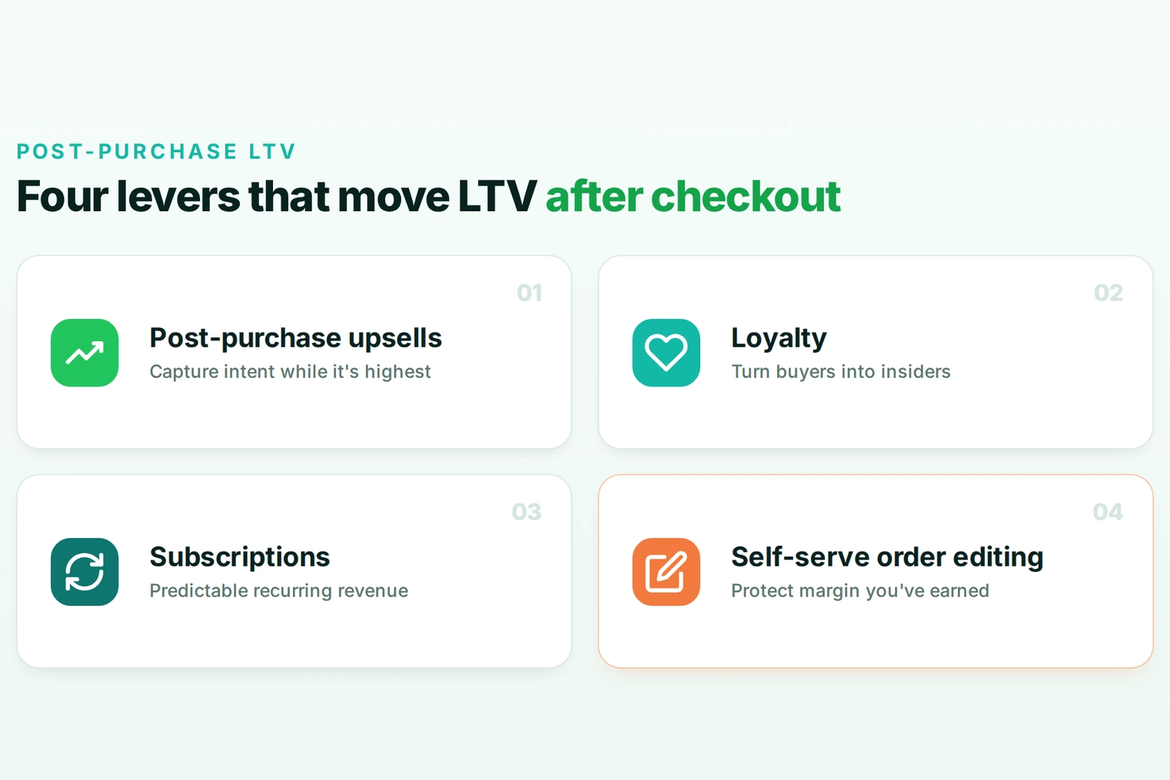
Self-serve order editing
Let customers fix
their own orders.
Give shoppers a short window to edit their Shopify orders after checkout. Cut your most frustrating support tickets and capture more revenue before fulfillment.